Recovery After a C-Section – A Safe Return to Training, Nutrition and Physical Fitness
First we restore the function of the body, then we build the shape.
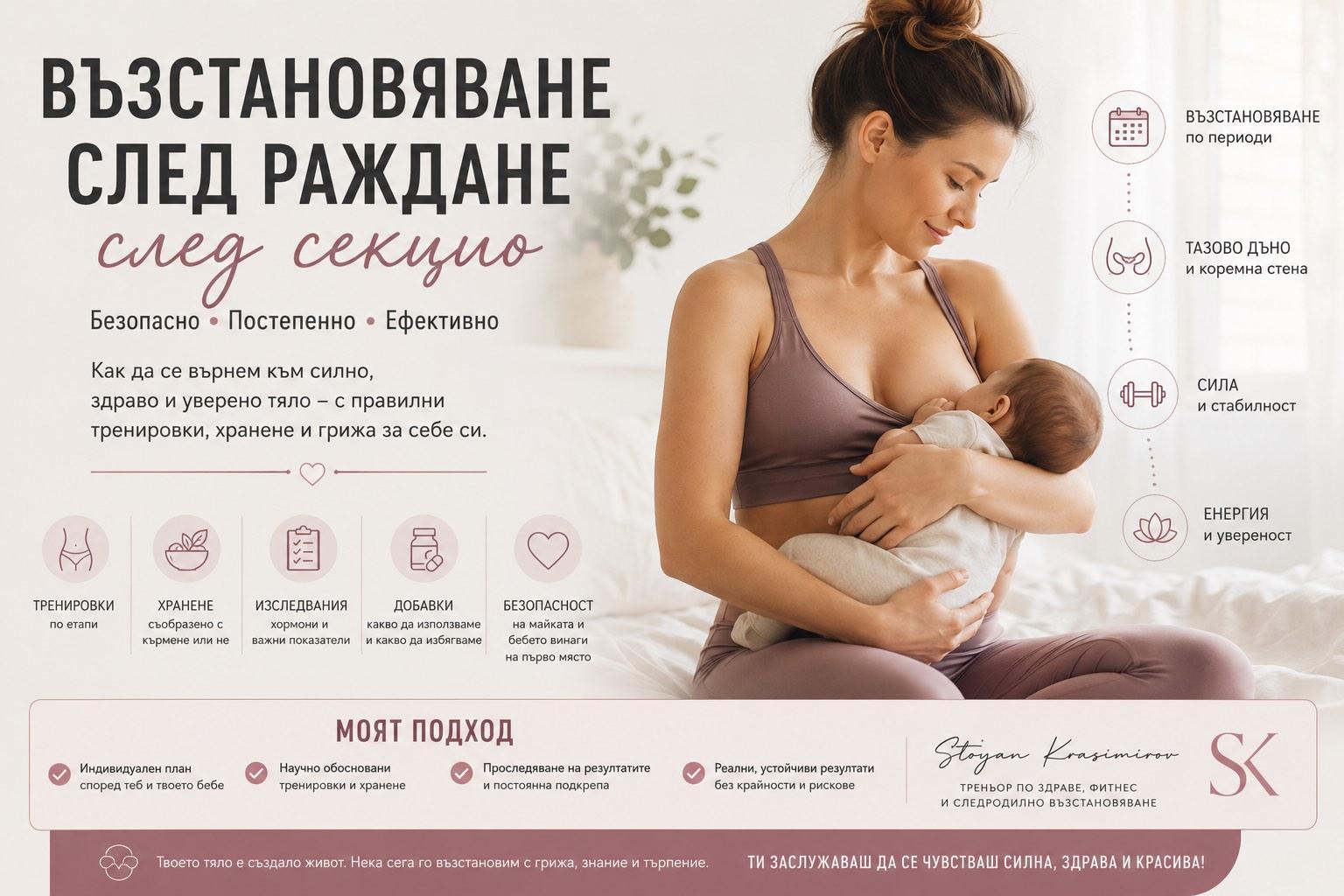
A caesarean section is major abdominal surgery, and the return to physical activity has to be matched to the individual recovery, to medical guidance and to the specific condition of the woman.
Recovery after a caesarean section is a process, not an event. The main principle I work by is a single one: first we restore the function of the body, then we build the shape.
Stage 1 – recovery and movement
The first step is a gradual return to movement, guided by the individual recovery and by medical judgement.
The focus is on:
- gradually increasing everyday activity
- controlled movement
- breathing
- comfort and tolerance
- watching how the body responds
Stage 2 – restoring control of the body
The next phase is aimed at gradually restoring control and coordination.
At this point what can matter is:
- breathing
- the abdominal wall
- the pelvic floor
- control of intra-abdominal pressure
- the quality of movement
The approach has to be individual, particularly when there are symptoms, pain, a suspected hernia, significant diastasis, incontinence or other complications.
Stage 3 – preparing for strength
When the body is ready, we move gradually toward more structured strength work.
The goal is to build up, step by step:
- strength
- stability
- control
- functionality
- confidence in movement
The load is adapted to the individual's progress.
Stage 4 – returning to full training
The return to more intense training should not be decided by the number of weeks since birth alone.
What matters is the individual recovery, the medical guidance, functional control and how the body responds to the load.
The abdominal wall, diastasis, breathing and intra-abdominal pressure
After pregnancy and a caesarean section, it is important to look at the function of the body as a whole.
Working on the abdominal wall does not simply mean doing abdominal exercises. Breathing, control, gradual loading and adaptation to movement can all matter.
Where there are symptoms, or a suspicion of a condition that calls for medical or physiotherapy assessment, a consultation with the relevant specialist is needed.
Nutrition after a C-section
Nutrition should support recovery and be matched to individual needs.
The approach can differ according to:
- the stage of recovery
- the level of physical activity
- the goals
- breastfeeding
- existing eating habits
- medical history
The aim is not aggressive restriction, but providing enough nutrients and taking a sustainable approach.
Breastfeeding and recovery
For women who are breastfeeding, the nutrition and training approach has to account for the additional individual needs.
It is not appropriate for every woman after birth to follow the same calorie deficit, the same training program or the same rate of progression.
Lab work and the individual approach
Where needed, appropriate lab markers can be discussed with the relevant medical specialist, according to the medical history, the symptoms and the individual context.
Supplements are not the foundation of recovery and should not replace nutrition, movement, sleep, recovery or medical assessment.
My approach
My approach is structured, but individual:
- assessment
- medical guidance where needed
- gradual movement
- restoring control
- progressive strength loading
- adapting to the response
- a sustainable return to good physical fitness
I do not use the same program for everyone.
Medical guidance and sources
The guidance of the American College of Obstetricians and Gynecologists (ACOG) describes physical activity after birth as something most women can resume gradually once their condition allows, and, for women after a caesarean section or after a complicated pregnancy or birth, following an individual assessment by the treating physician.
The physical activity recommendations of the Centers for Disease Control and Prevention (CDC) likewise emphasise a gradual return to regular activity after pregnancy, and consulting a healthcare professional in the case of health problems or complications.
This guidance is a framework, not an individual plan. The specific pace, volume and type of loading are therefore decided around your own recovery and the instructions of your doctor.
Important note
The information in this article is educational and does not replace a medical examination, diagnosis or treatment. A return to training after a caesarean section must be matched to individual recovery and to medical advice, and every program begins after clearance from the monitoring OB-GYN. In the case of pain, bleeding, prolapse, incontinence, suspected hernia, significant diastasis or other complications, seek a doctor or another suitably qualified specialist. An individual assessment is the foundation of safe and effective recovery.