Diastasis Recti: What It Is and How to Recover Safely
What it is, why it happens and how it can be safely recovered.
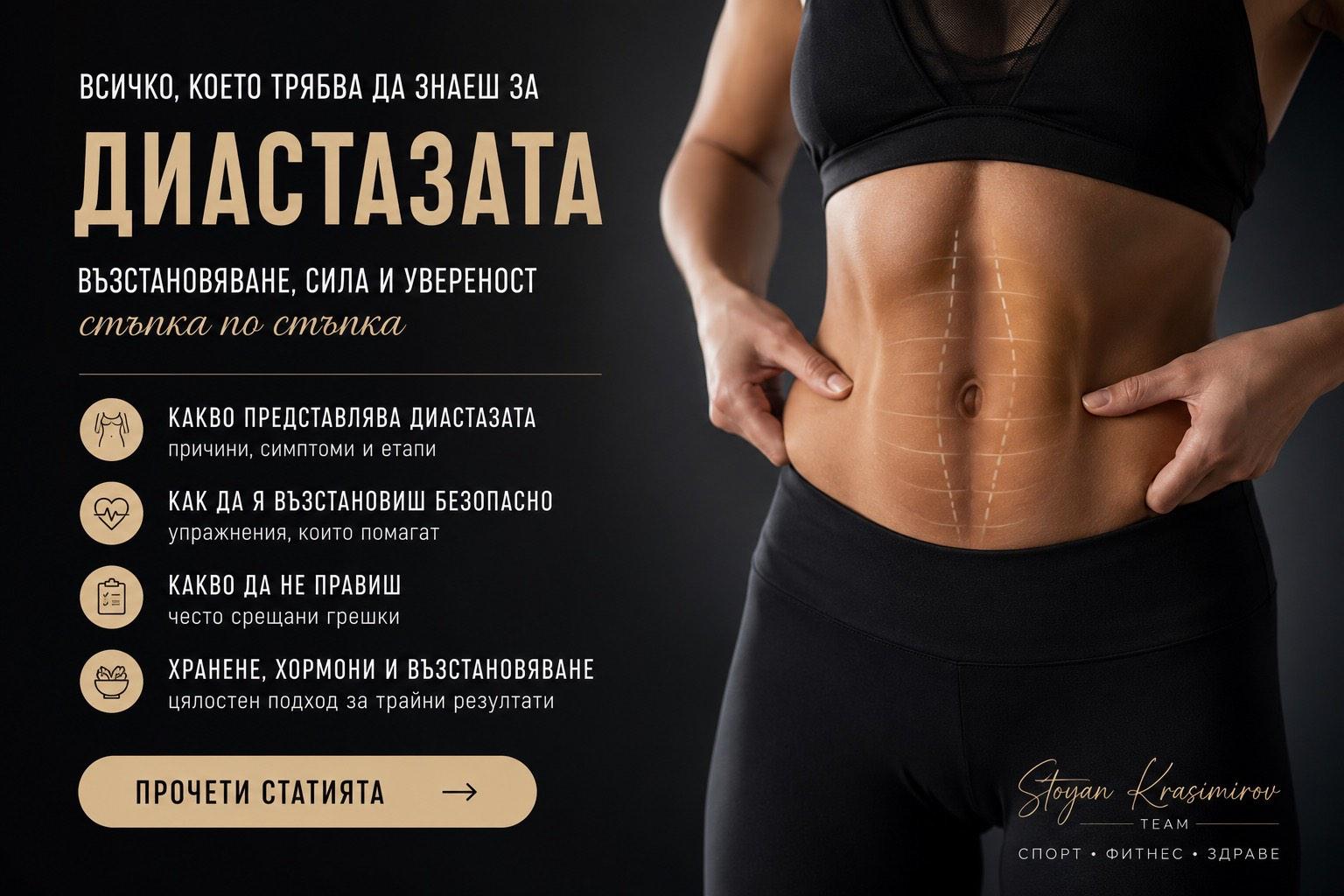
One of the most common changes that occur in a woman's body during pregnancy and after birth is diastasis of the rectus abdominis muscles (Diastasis Recti Abdominis).
Although many women assume it is purely an aesthetic issue, the truth is that diastasis is a functional condition that can affect the stability of the body, posture, breathing, the work of the pelvic floor and the quality of everyday life.
The good news is that in a large share of cases the right approach can significantly improve the function of the abdominal wall and support a safe recovery.
What is diastasis recti?
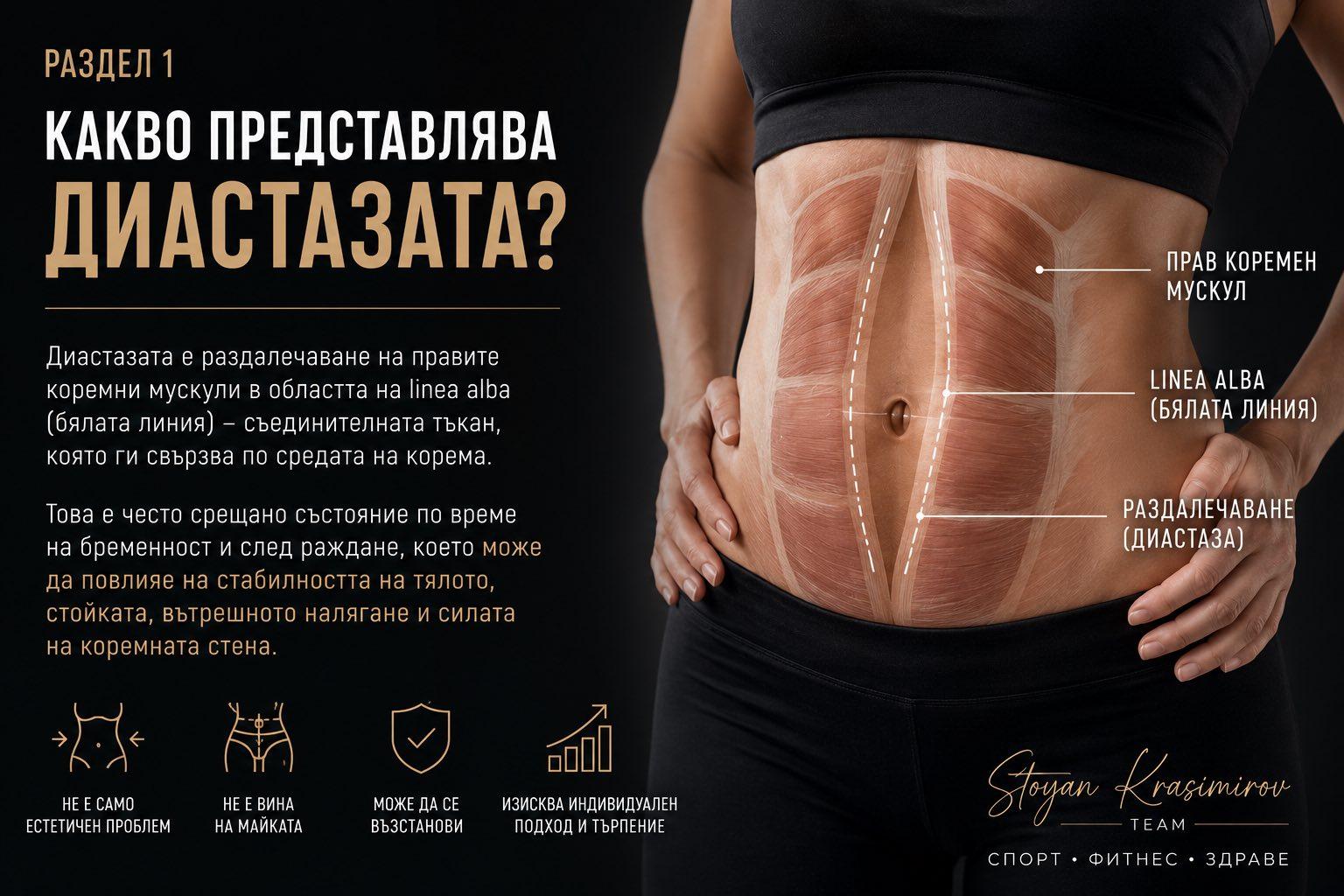
The rectus abdominis muscles are connected by a band of connective tissue called the linea alba.
During pregnancy the growing uterus, hormonal changes and rising intra-abdominal pressure gradually stretch this structure.
When the distance between the two rectus abdominis muscles becomes greater than is physiological, we speak of diastasis.
This is a natural process during pregnancy and is not in itself a disease. In some women, however, the separation does not fully recover after birth, and targeted rehabilitation is needed.
Why does it appear?
The causes are usually a combination of several factors:
- pregnancy
- multiple pregnancy
- a large baby
- repeated pregnancies
- weakness of the abdominal-wall muscles
- increased intra-abdominal pressure
- incorrect training technique
- genetic characteristics of the connective tissue
It is important to know that diastasis does not occur because a woman did something “wrong.” It is a natural adaptive process of the body.
What symptoms can it cause?
Not every diastasis causes complaints. When symptoms are present, the most common are:
- bulging or a “cone-shaped” doming of the abdomen
- a feeling of weakness in the core
- instability of the abdominal wall
- low-back pain
- impaired posture
- reduced strength
- difficulty performing everyday movements
- reduced stability of the pelvis
- a connection, in some women, with impaired pelvic-floor function
When does recovery begin?
Recovery begins after clearance from the monitoring OB-GYN.
After a vaginal birth this is usually after the first postnatal check-up, and after a caesarean section it depends on individual recovery and the recommendations of the treating physician.
The most important thing is not to rush. Postnatal recovery is a process, not a race.
How does recovery unfold?
In my practice I do not work from ready-made programs.
Every woman has a different degree of separation, a different state of connective tissue, a different pelvic floor, a different daily routine and different goals. That is why I build the program individually.
The work includes:
- assessment of the abdominal wall
- assessment of posture
- analysis of the breathing pattern
- assessment of movement patterns
- gradual activation of the deep abdominal muscles
- restoring stability
- progressive increase of the training load
- a safe return to strength training
Which exercises do I use?
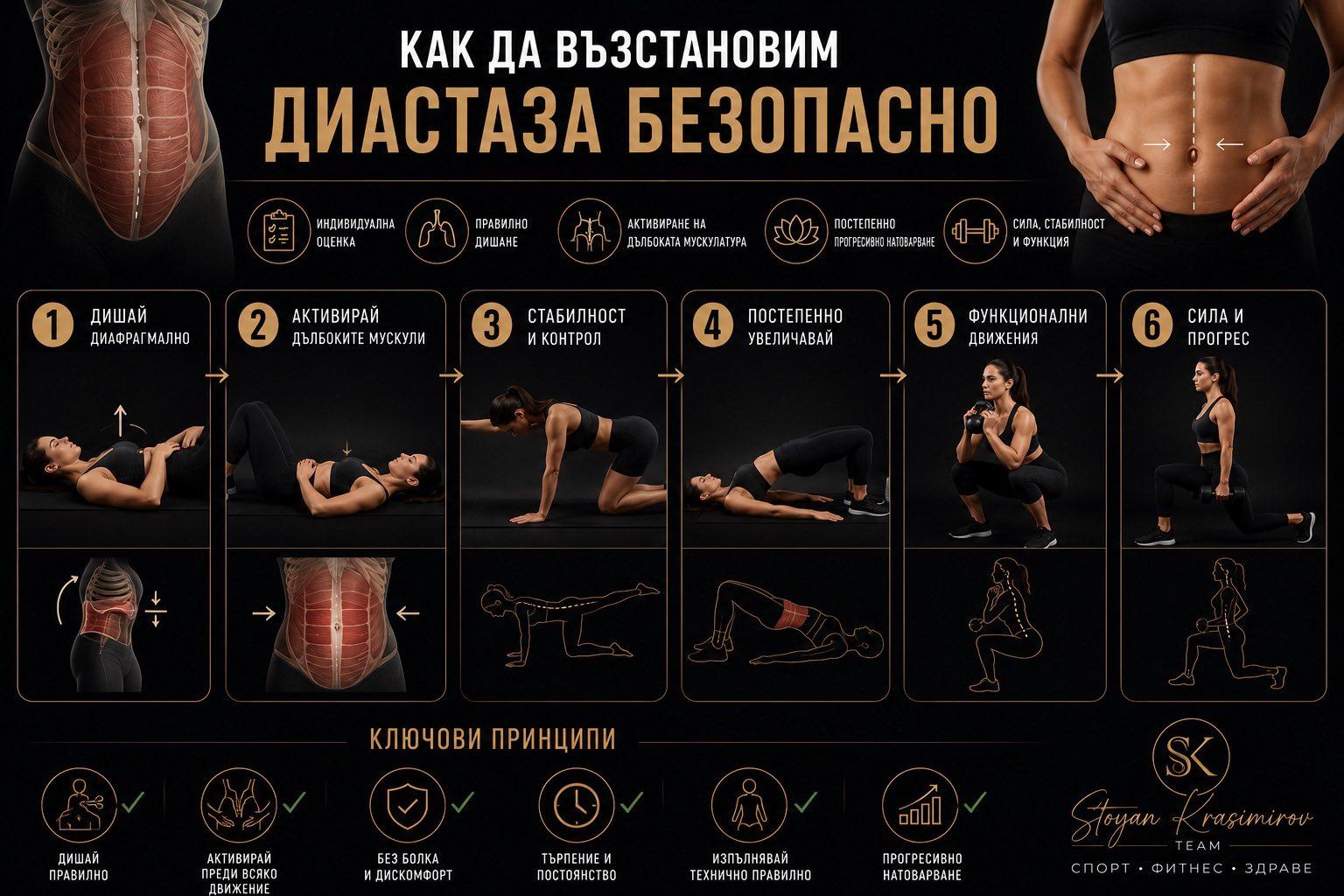
The choice of exercises depends on the specific case. The program may include:
- diaphragmatic breathing
- activation of the transverse abdominis (Transversus Abdominis)
- pelvic-floor exercises
- stability exercises
- exercises for controlling intra-abdominal pressure
- functional movements
- strength exercises with a gradual increase of the load
The goal is not simply to “close” the diastasis, but to restore the function of the whole abdominal wall.
What I don't recommend in the early stages
For many women the problem is not the exercises themselves, but the wrong timing or the way they are performed.
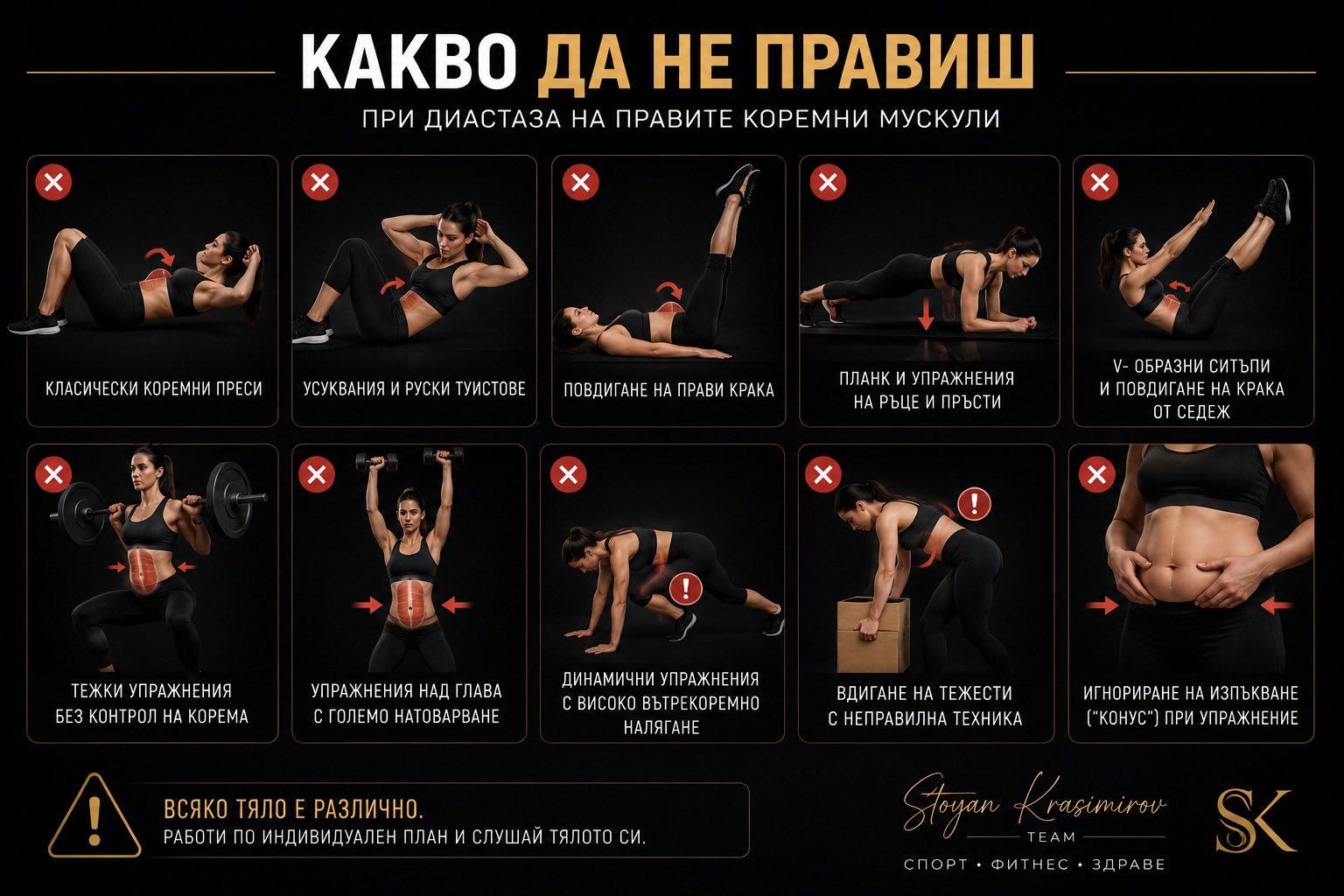
Depending on the individual assessment, exercises that significantly increase intra-abdominal pressure may be limited for a time, such as:
- classic sit-ups / crunches
- aggressive abdominal exercises
- incorrectly performed planks
- heavy strength exercises without established stability
- exercises that produce marked bulging of the abdominal wall
This does not mean these exercises are “banned” forever. With proper recovery, many women can gradually and safely return to them.
The role of nutrition
Recovery does not depend on training alone. Good nutrition supports:
- tissue recovery
- building muscle mass
- reducing excess body fat
- recovery after physical activity
- maintaining energy during motherhood
When needed, I prepare an individual nutrition plan and supplement recommendations tailored to the specific needs of the woman.
How I can help
As a certified Pre & Postnatal Fitness & Nutrition Coach, I work with women in the period after birth, with the main goal of a safe and functional recovery of the body.
My work includes:
- an individual assessment of your condition
- a personalised training program
- gradual restoration of the abdominal wall
- work on the pelvic floor
- improving posture and motor control
- an individual nutrition plan
- guidance on suitable supplementation
- ongoing tracking and adaptation of the program
I believe postnatal recovery should not be about fast results or extreme restrictions. The goal is for a woman to rebuild the strength, function and confidence in her own body, while building healthy habits that last a lifetime.
Important note
The information in this article is educational and does not replace a medical examination or treatment. Every program begins after clearance from the monitoring OB-GYN. In the case of severe pain, suspected hernia, severe diastasis or other complications, a consultation with a doctor or physiotherapist is required. An individual assessment is the foundation of safe and effective recovery.