Pelvic Floor Recovery After Birth
Everything you need to know about one of the most important muscle groups in the female body.
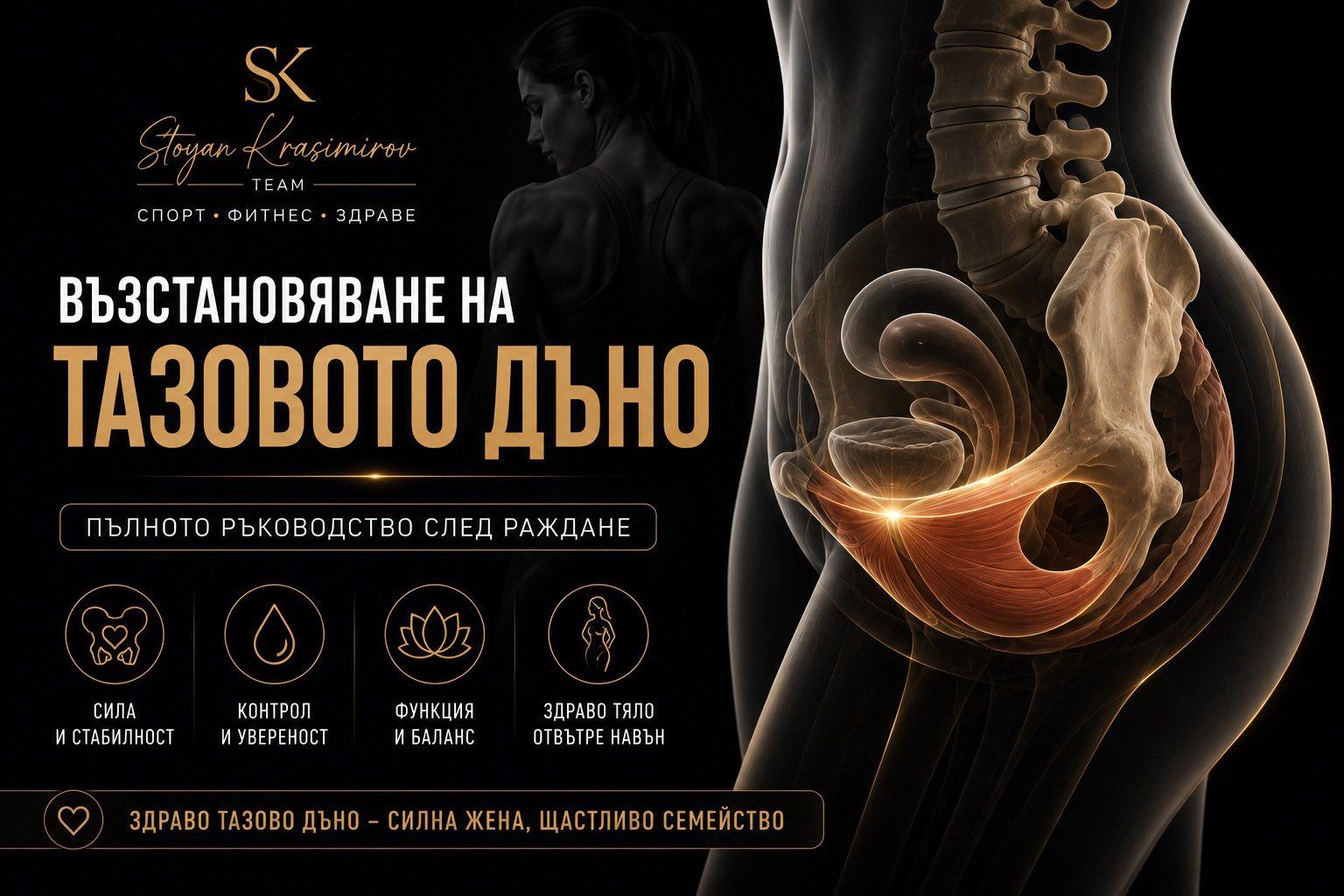
After birth most women pay attention only to the scale and the belly. In reality, one of the biggest changes happens in a structure that cannot be seen – the pelvic floor.
It plays a key role in the stability of the body, correct movement, control of the bladder and bowel, sexual function and quality of life.
After pregnancy and birth these muscles can be weakened, stretched or work inefficiently. The good news is that in most cases, with the right approach, their function can improve significantly.
What is the pelvic floor?
The pelvic floor is a group of muscles, ligaments and connective tissue that form a kind of “hammock” at the base of the pelvis.
These muscles support:
- the bladder
- the uterus
- the vagina
- the rectum
They are also actively involved in:
- stabilising the spine
- correct breathing
- controlling intra-abdominal pressure
- the work of the deep abdominal muscles
- movement during any physical activity
What happens during pregnancy?
Throughout the nine months, the pelvic floor works continuously.
The growing weight of the baby, the placenta and the amniotic fluid increases the load on these muscles.
Hormones make the connective tissue more elastic so the body can prepare for birth. All of these changes are completely normal.
What happens after birth?
After a vaginal birth or a caesarean section, the pelvic floor needs time to restore its function.
In some women recovery happens naturally, while in others there are symptoms that call for focused work.
The most common symptoms
- leaking urine when coughing or sneezing
- a feeling of heaviness in the pelvis
- low-back pain
- instability
- reduced strength
- pain during intimacy
- a feeling of weakness in the lower abdomen
- difficulty with exercise
- a sensation of “pressure” toward the vagina
Why is the pelvic floor linked to diastasis?
This is one of the most frequently asked questions.
The abdominal muscles, the diaphragm and the pelvic floor work as a single functional system. When one part is weakened, the others begin to compensate.
That is why, in recovery after birth, we never work on the abdomen alone or the pelvic floor alone. We work on the whole body.
When does recovery begin?
Only after clearance from the monitoring OB-GYN. After that, the load is increased gradually.
- We do not start with strength exercises.
- We do not start with weights.
- We do not start with sit-ups.
- We start by restoring function.
How does recovery unfold?
My method involves several consecutive stages. First we restore:
- correct breathing
- control of intra-abdominal pressure
- the connection between the diaphragm, the abdominal wall and the pelvic floor
Then we move on to:
- activating the deep muscles
- stabilisation
- functional exercises
- strength exercises
- a safe return to normal physical activity
Which exercises do I use?
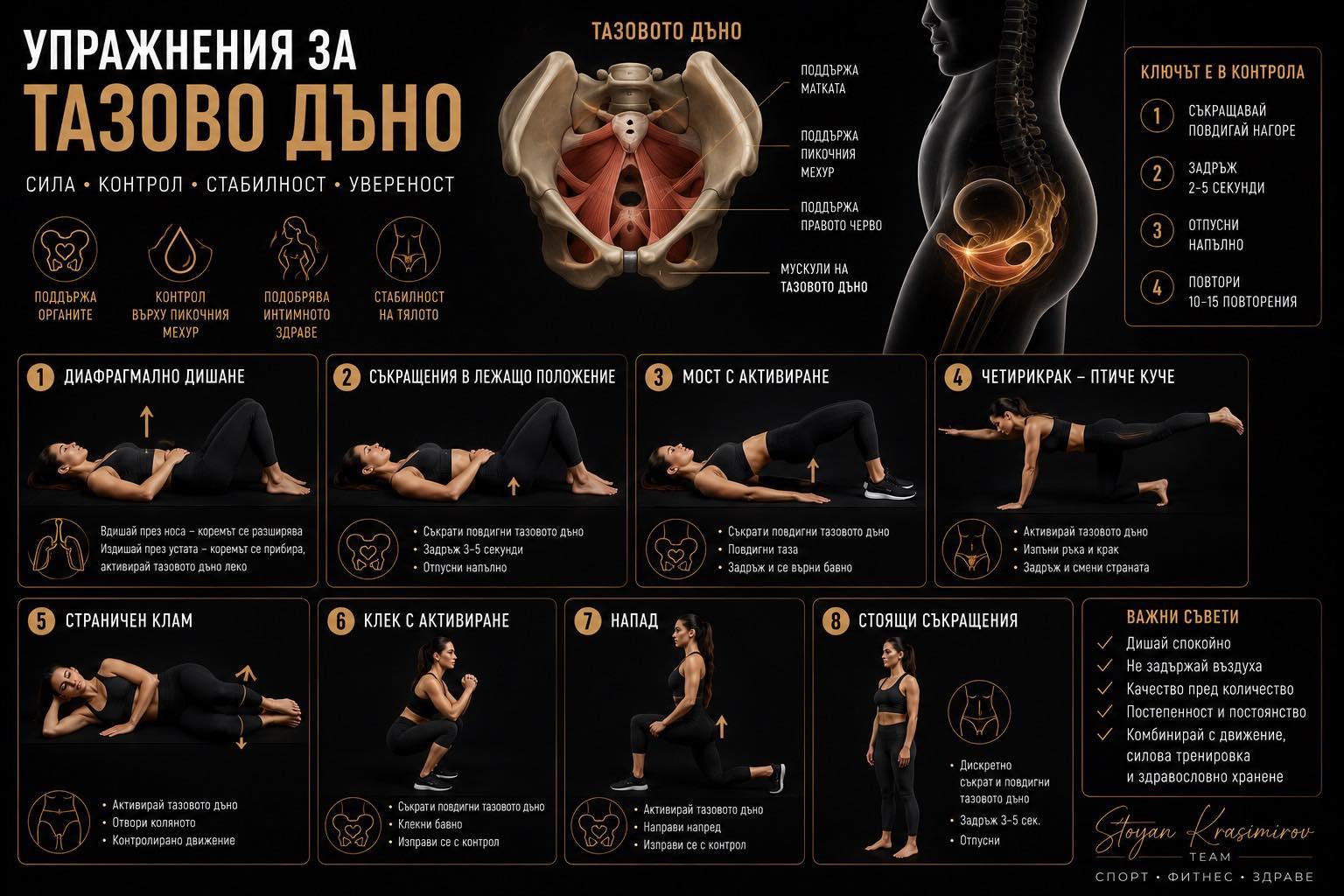
Every program is individual. Most often it includes:
- diaphragmatic breathing
- pelvic-floor exercises
- activation of the transverse abdominis (Transversus Abdominis)
- stability exercises
- balance exercises
- glute exercises
- posture exercises
- functional movements
- a gradual introduction of strength exercises
What I don't recommend
In the early stages I do not recommend exercises that significantly increase intra-abdominal pressure before control of the abdominal wall and pelvic floor has been restored.
We avoid:
- heavy lifting
- incorrectly performed abdominal exercises
- strength exercises without good technique
- holding the breath under load
- excessive load too early
It is important to stress that these are not lifelong bans. With proper recovery, most women can gradually return to the workouts they love.
The role of nutrition and hormones
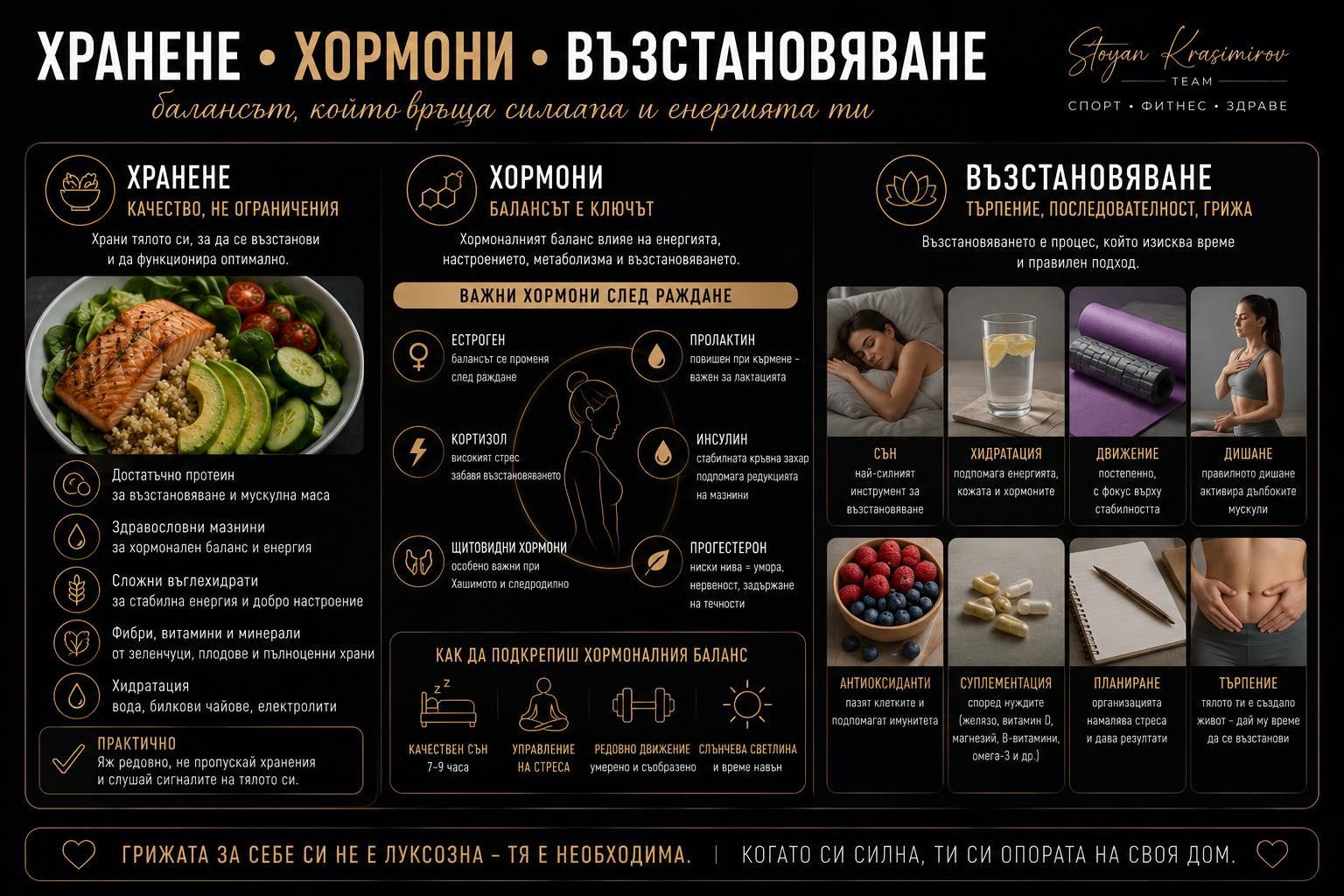
Postnatal recovery does not depend on training alone. Restoring muscle and connective tissue requires:
- adequate protein intake
- healthy fats
- vitamins and minerals
- good hydration
- quality sleep
- managing stress
When needed, I recommend lab tests and prepare an individual nutrition plan and supplementation tailored to the woman's condition and goals.
How I can help
As a certified Pre & Postnatal Fitness & Nutrition Coach, my work is focused on the safe and functional recovery of a woman's body after birth.
I work with an individual approach, and the programs include:
- an assessment of your condition
- pelvic-floor recovery
- work on diastasis
- postnatal training
- an individual nutrition plan
- guidance on suitable supplementation
- tracking and adapting the program as you progress
My goal is not simply for a woman to lose weight. The goal is for her to rebuild the strength, stability and confidence in her own body, so she can move again without pain, without fear and with joy.
Important note
The information in this article is educational and does not replace a medical examination or treatment. Every program begins after clearance from the monitoring OB-GYN. In the case of prolapse, severe pain, incontinence or other complications, a consultation with a doctor or physiotherapist is required. An individual assessment is the foundation of safe and effective recovery.